> For the complete documentation index, see [llms.txt](https://docs.bizmagnets.ai/llms.txt). Markdown versions of documentation pages are available by appending `.md` to page URLs; this page is available as [Markdown](https://docs.bizmagnets.ai/bot-flows/integrations/connect-your-system-with-the-whatsapp-chat-bot-using-api.md).
# Connect Your System with the WhatsApp Chat Bot Using API
Learn how to seamlessly integrate external APIs using the API Call feature. Configure HTTP methods, URLs, headers, authentication, and more with detailed instructions.
## **Overview**
The API Call feature enables the integration of external APIs into the system by allowing users to make HTTP requests to specified URLs.
## What is an API?
An API (Application Programming Interface) is a set of rules and protocols that allows different software applications to communicate with each other. It defines the methods and data formats that applications can use to request and exchange information. APIs enable the integration of different systems and services, facilitating the development of complex functionalities by leveraging existing components.
## API methods in BizMagnets
API methods are requests dictating actions like retrieving, submitting, updating, or removing data between applications. Below are the API methods you can use in BizMagnets bot:
* **Get:** Use this method to **retrieve** information or data from a specified resource.
* **Post:** Use this method to **submit** data to a specified resource.
* **Patch:** Use this method to **partially update** a specified resource.
* **Put:** Use this method to **replace** a specified resource with new data.
* **Delete:** Use this method to **delete** a specified resource.
## Key Components of the API Call Connector
The API Call Connector in BizMagnets includes several components that enable efficient interaction with external APIs. Here are the key components and their descriptions:
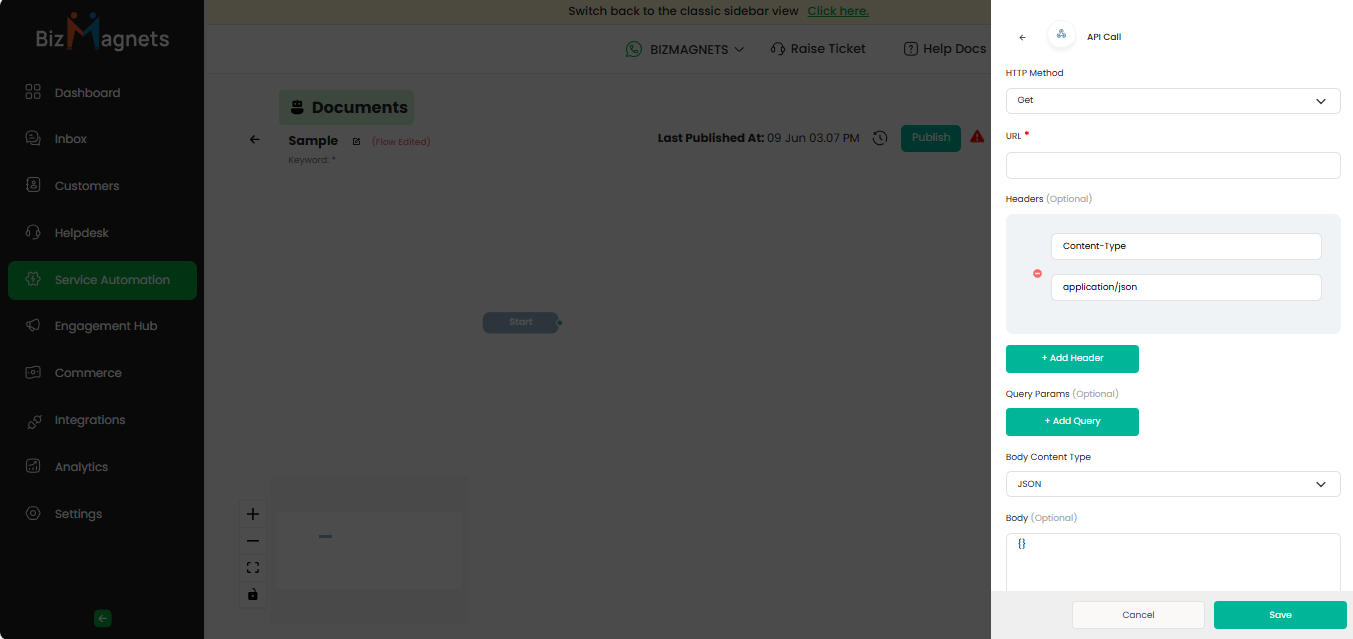
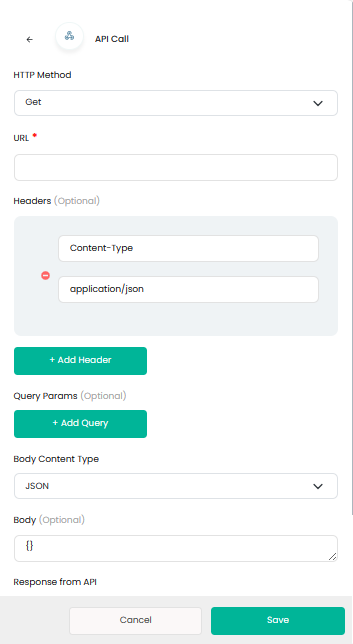
| Field Name | Description |
| ------------------------------- | -------------------------------------------------------------------------------------------------------------------------------------- |
| **HTTP Method** | Choose the HTTP method to be used for the API call, such as `GET`, `POST`, `PUT`, `PATCH` or `DELETE`. |
| **URL** | The endpoint URL to which the API call will be made. |
| **Headers** | Additional information included in the request headers, such as content type, authorization, or custom headers. |
| **Authentication** | Select the application from Hubspot, Zoho CRM, Zoho Bigin, Razorpay, and Zoom. |
| **Select Connection** | Allows users to choose from pre-configured connections or set up new connections to external systems. |
| **Query Parameters** | Optional parameters included in the API call URL to customize the request. |
| **Body Content Type** | Specifies the format of the request body content, such as JSON, XML, or form-URL encoded. |
| **Body** | The payload or data to be sent in the request body, if applicable. |
| **Test Values** | Allows users to input test values for the API call to simulate and validate the request. |
| **Response from API** | Displays the response received from the API after making the request, including status code, headers, and body content. |
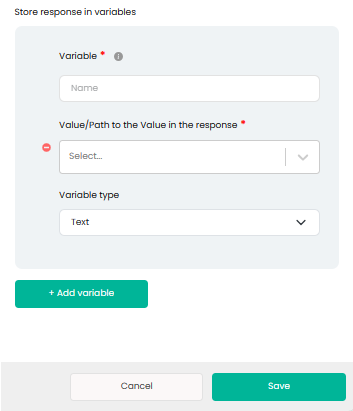
| **Store Response in Variables** | Provides the option to store specific values from the API response or the entire API response in variables to use in subsequent cards. |
The API Call feature provides users with a powerful tool to seamlessly integrate external APIs into the system. By following the provided guidelines, users can configure and execute API calls effectively, retrieve relevant data, and utilize it for various system functionalities.